Element
Phase in the Cycle
Select an element to explore its characteristics.
Nourishes (Generates)
—
Regulates (Controls)
—
Psychological Archetype
—
The animal sign is merely the surface. Underpinning the entire system is the dynamic interplay of the Wu Xing — the Five Elements or Phases. This isn't mysticism; it's an ancient model of transformation, describing how states of energy (Wood, Fire, Earth, Metal, Water) naturally give rise to one another and influence character tendencies.
Analytical Framework, Not Destiny: The elemental interactions presented here are a symbolic language for understanding change and potential conflict or harmony within psychological profiles. They are probabilistic, not deterministic.
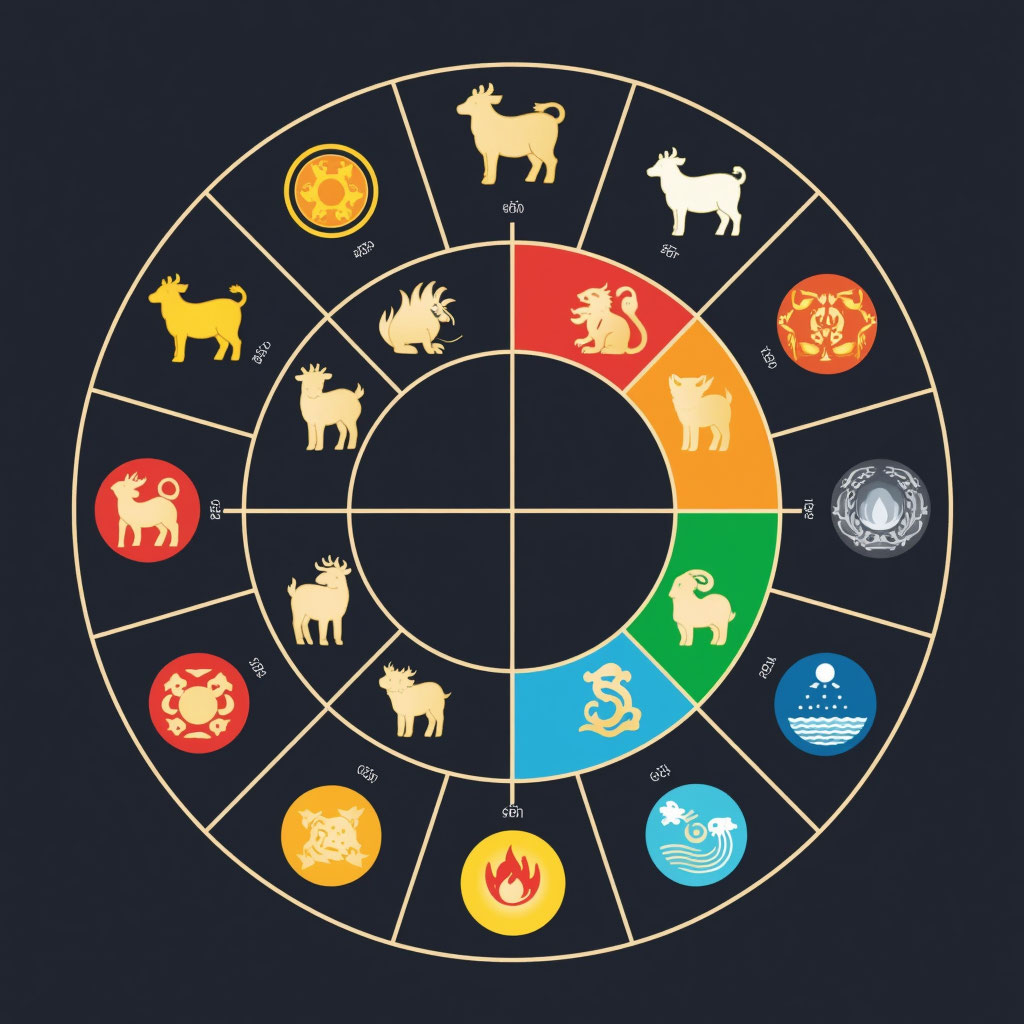
The 60-year "Stem-Branch" cycle: A complex matrix where each year receives a unique combination of one of 12 animals and one of 5 elements, creating nuanced archetypal variations.
The true utility of any archetypal system lies not in static labels, but in understanding the dynamics between them and their unfolding in time. Here, we shift from cataloging traits to examining interaction and temporal context.
Framework, Not Fortune-Telling: The following matrices and timelines are analytical models. They illustrate potential thematic tensions and harmonies based on symbolic attributes, not deterministic outcomes for relationships or life events.
How symbolic energies might interact, conflict, or synergize.
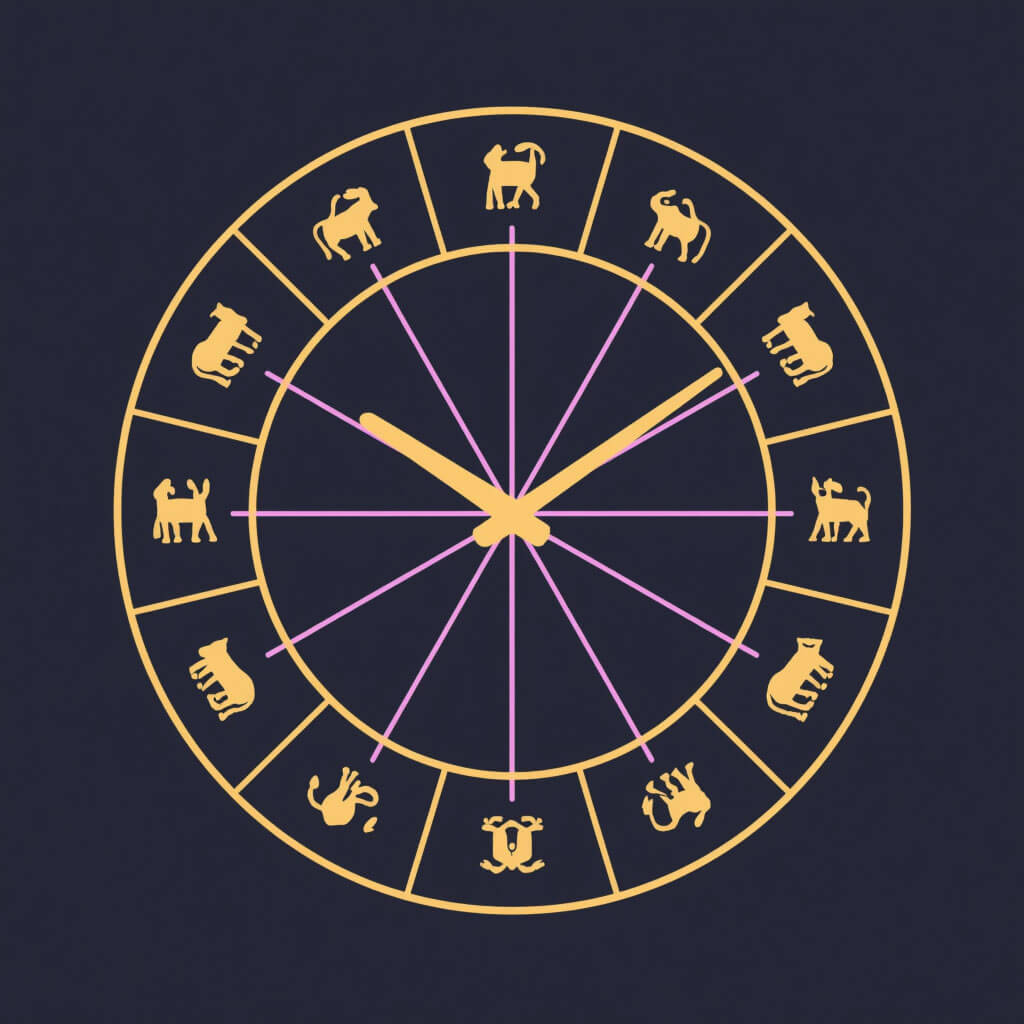
This diagram is a heuristic tool. A "Harmonious Resonance" suggests archetypes whose symbolic functions (e.g., Ox's steadfastness, Rooster's precision) may support rather than frustrate each other. A "Thematic Challenge" indicates potential for friction—not a prophecy of conflict, but a map of where conscious negotiation of differing modes might be most required.
For instance, the assertiveness of a Tiger archetype might naturally clash with the introspective depth of a Snake archetype, requiring mutual adaptation for collaboration.
Each archetype is also linked to a lunar month and a two-hour window of the day.
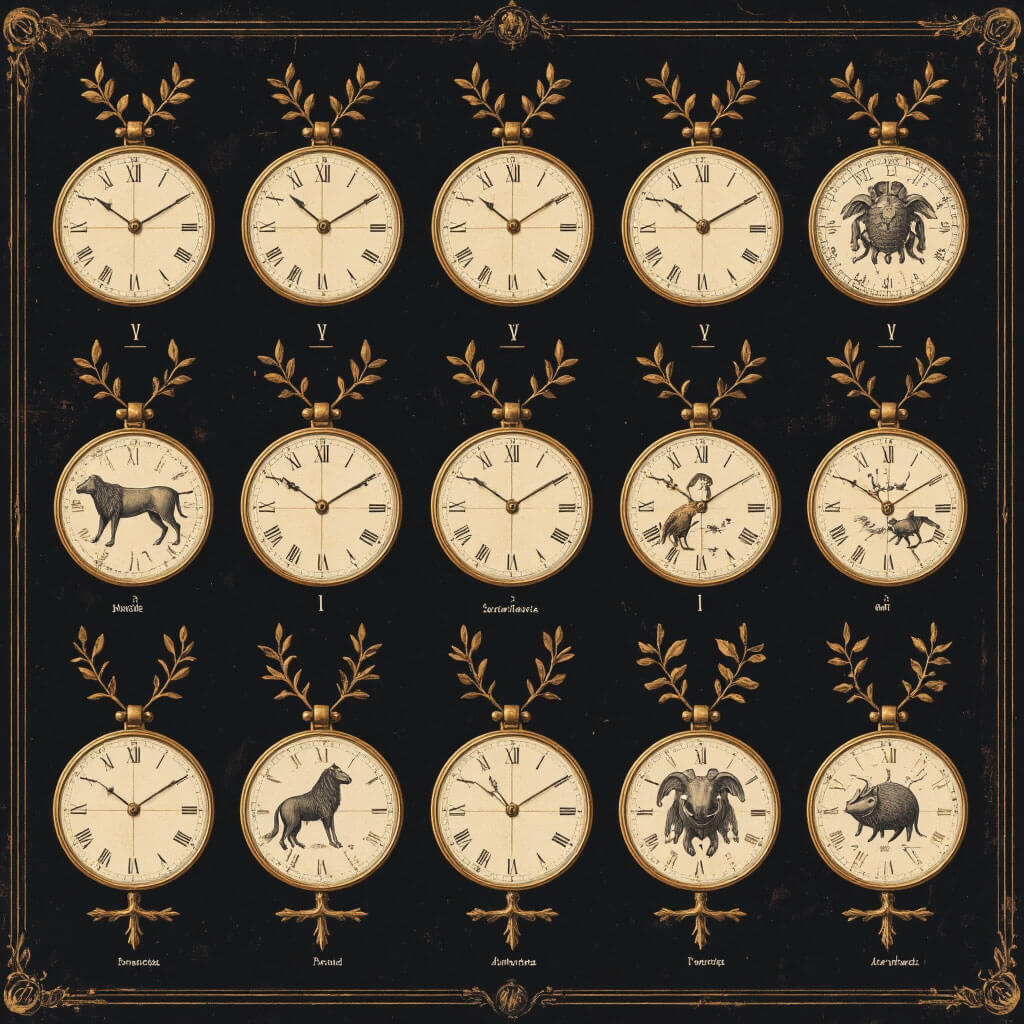
Your year-sign is the dominant theme, but the system adds layers. The month-sign colors the expression of the year, and the hour-sign is considered the "inner self."
This tripartite structure discourages simplistic labeling. It presents a multifaceted psychological portrait, acknowledging that we contain multitudes.
In the end, these cycles offer not a verdict, but a vocabulary. They provide a language for discussing temperament, timing, and interpersonal dynamics that is richer than mere chance but far less rigid than fate. The goal is not to know what will happen, but to be more thoughtfully engaged with what is happening.